Vietnam’s Early Diplomacy Under the New Government: An Economic Statecraft Strategy

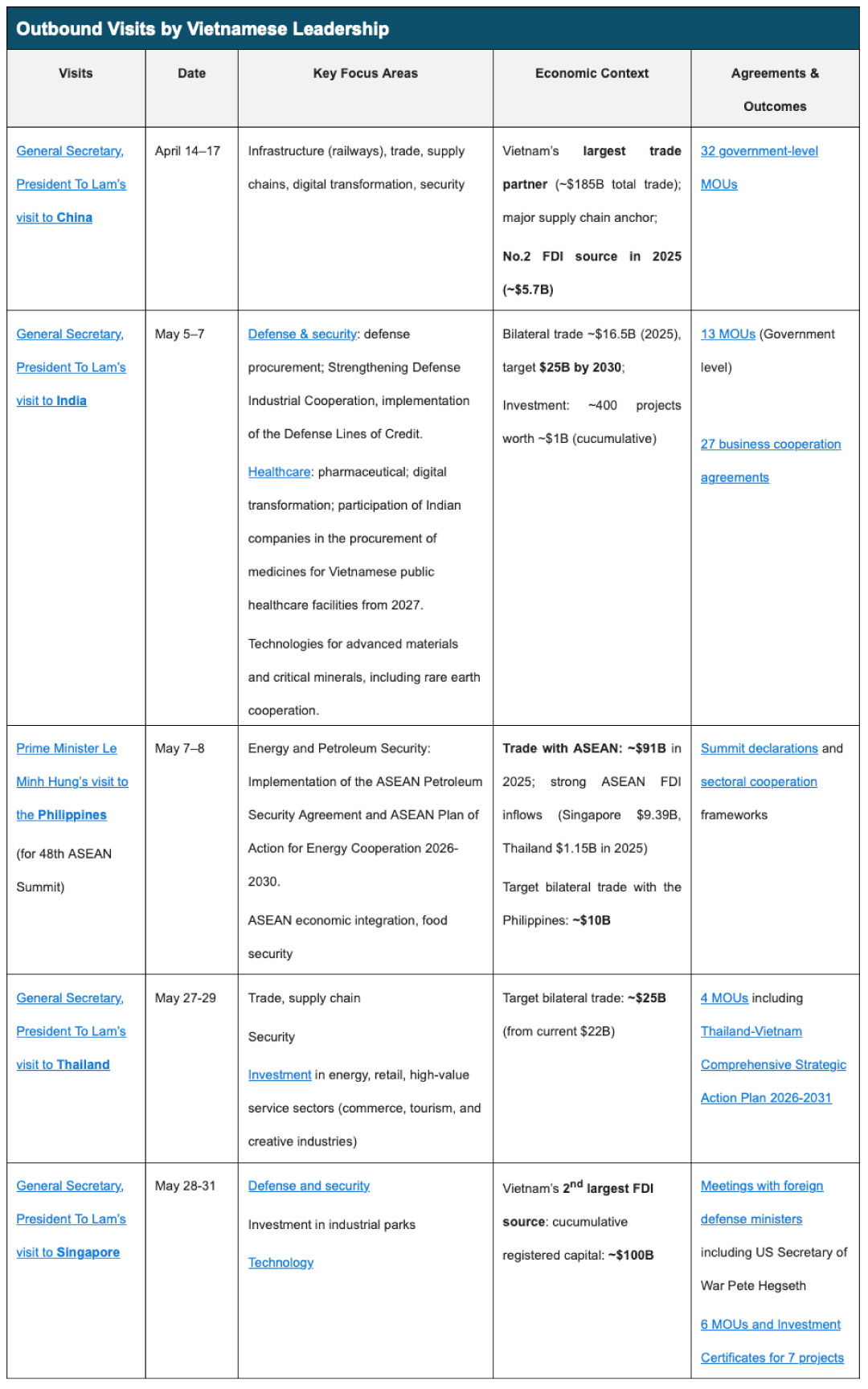
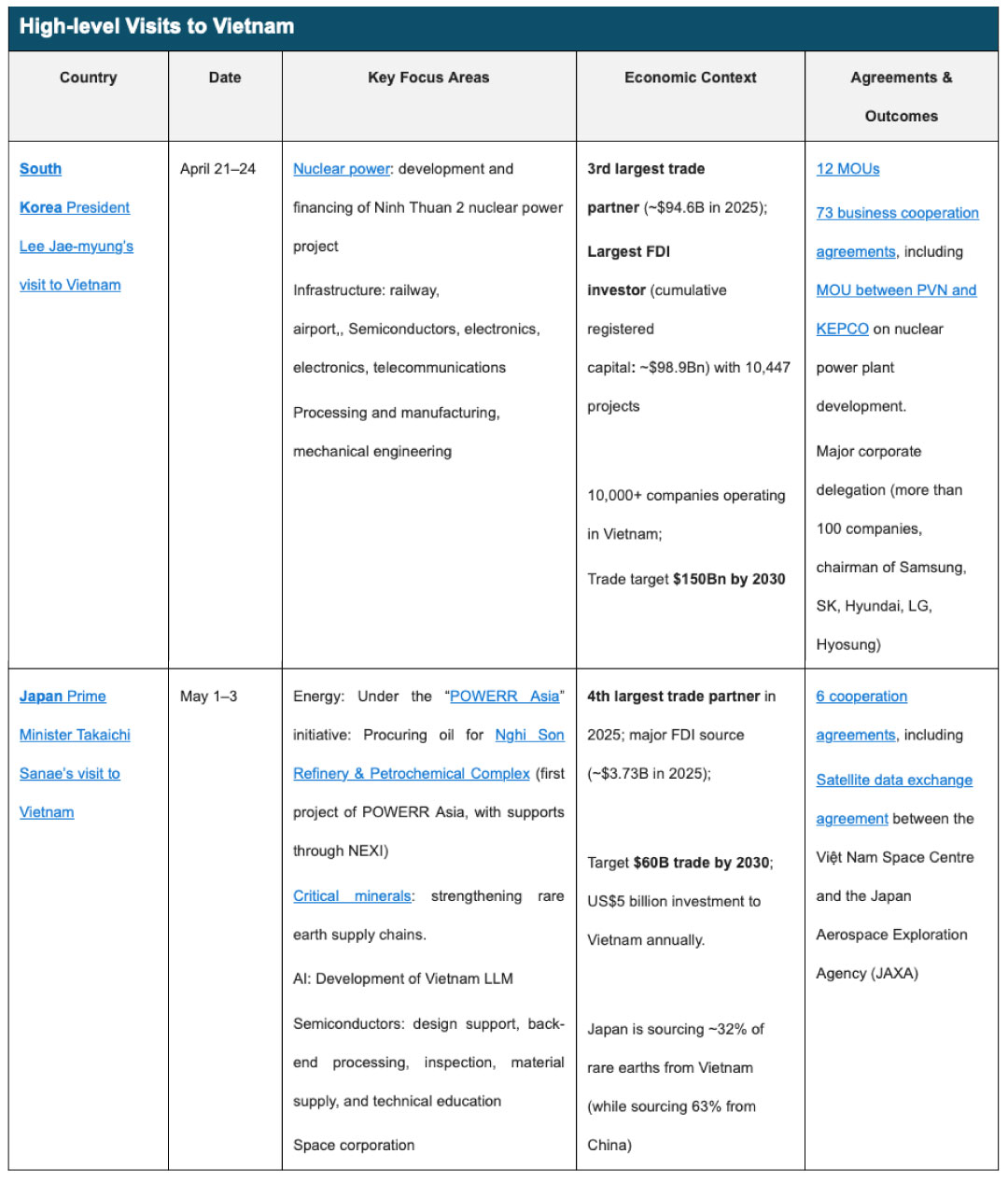
Within weeks of the new government’s confirmation, Vietnam has moved rapidly to activate high-level diplomacy across Asia. Hanoi has hosted or conducted engagements at the highest level with China, India, ASEAN partners, South Korea, and Japan. The early diplomatic calendar is significantly Asia-focused.
This is not coincidental but reflects the structural realities of Vietnam’s economic integration. China, South Korea, Japan, India, and ASEAN collectively form the backbone of Vietnam’s trade, investment, and supply chain architecture, accounting for most of its top trading partners as well as its largest sources of foreign direct investment. Against an extraordinarily ambitious development trajectory of double-digit GDP growth and high-income status by 2045, and amid a challenging global environment, Vietnam is leveraging diplomacy to secure access to external capital, technology, and markets, while diversifying its external relations to navigate uncertainty by deepening cooperation and managing risk. This orientation was articulated by General Secretary, President To Lam, both during his visit to India and in his keynote address at the 23rd Shangri-La Dialogue in Singapore, where he highlighted the paradox of rising interdependence alongside declining trust and increasing vulnerability in global economic systems.
The intensity of inbound diplomacy suggests external partners are also moving quickly to position themselves, drawn by Vietnam’s strategic location, central role in supply chains, and expanding domestic market. The surge in diplomatic engagements therefore reflects a dual dynamic: partners see opportunity in Vietnam’s new leadership phase, while Vietnam seeks to secure resources critical to its next stage of development. Diplomacy is increasingly pragmatic and outcome-driven, focused on investment, infrastructure, and industrial upgrading.
While economic priorities dominate, defense and security cooperation is becoming an increasingly visible pillar. Discussions with India have included defense industrial cooperation as core priority, including discussion on the potential procurement of advanced systems such as BrahMos supersonic cruise missiles. Meanwhile, General Secretary To Lam’s address at the Shangri-La Dialogue during his May 29–31 visit to Singapore marked the first time a General Secretary of the Communist Party addressed the region’s most consequential security forum.
Major Diplomatic Engagements (April – May, 2026)